Restaurant Technology · Uncategorized
Work-Life Balance in the Restaurant Industry: A Joke or a Journey?
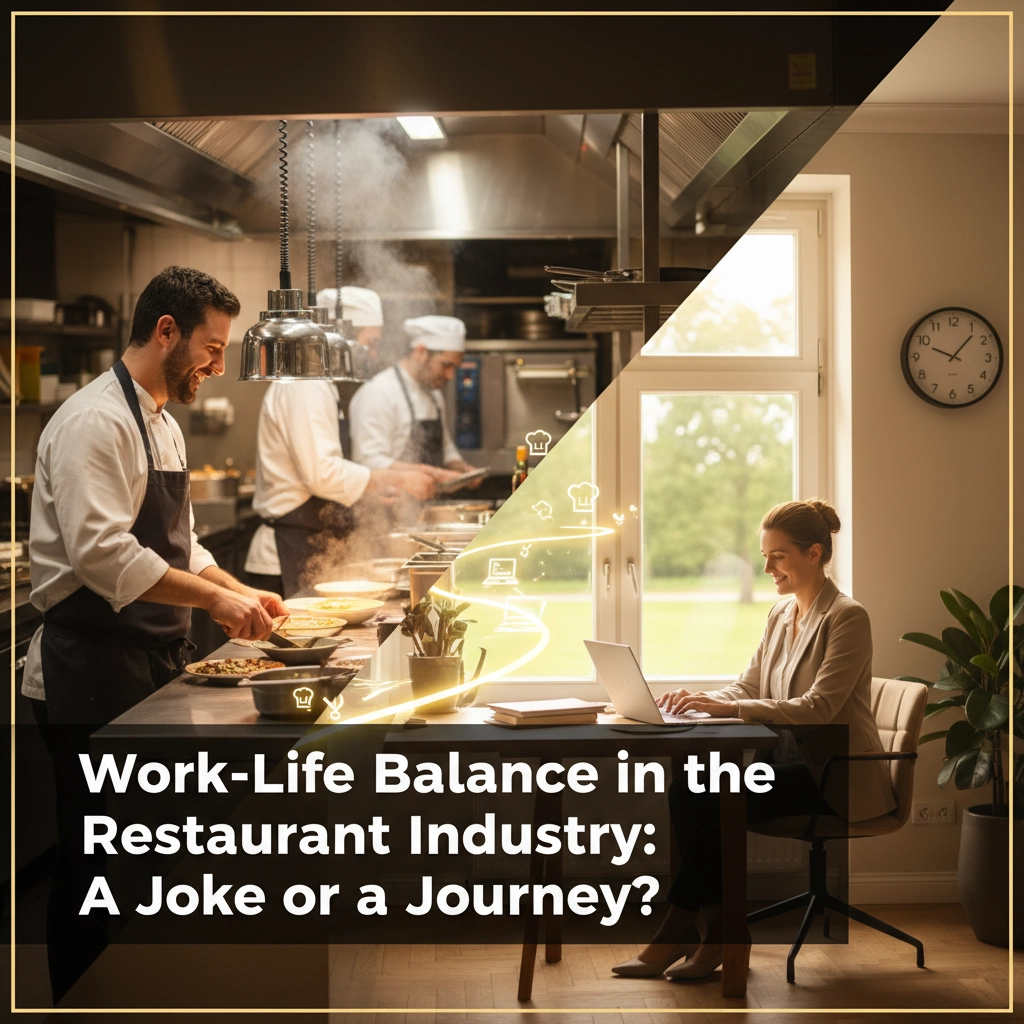
Picture this: A line cook finishes a 14-hour shift at 2 AM, stumbles home to find their significant other has left a passive-aggressive note about missing dinner again, and their phone buzzes with a text from their manager asking if they can cover an opening shift in five hours. Work-life balance in restaurants? That's not just a joke, it's a full-blown comedy special that nobody signed up to watch.
But here's the thing: while the punchline might be painfully familiar to anyone who's ever worked a double on Valentine's Day, the restaurant industry is slowly, very slowly, starting to realize that maybe, just maybe, treating employees like kitchen equipment isn't the best long-term strategy.

The Brutal Reality: When "Balance" Becomes a Four-Letter Word
Let's start with some hard truths that would make even the most optimistic restaurant consultant reach for the cooking sherry. According to recent industry data, one-third of restaurant employees report that juggling work and family responsibilities literally costs them sleep and dramatically reduces their energy levels. Even more sobering? A staggering 38% have missed major life events, birthdays, anniversaries, their kid's first steps, because of poor work-life balance.
Think about that for a second. Nearly 4 out of 10 restaurant workers have had to choose between their paycheck and being present for the moments that matter most. That's not just a scheduling problem, it's a human problem disguised as an operational necessity.
The numbers get even more uncomfortable when you dig deeper. Restaurant turnover rates are absolutely bonkers: full-service restaurants see 75-100% annual turnover, while quick-service establishments are pushing 130%. That means some restaurants are essentially replacing their entire staff more than once a year. At that point, you're not running a restaurant, you're operating a very expensive revolving door that happens to serve food.
Why Restaurant "Balance" Feels Like a Unicorn Riding a Bicycle

The structural challenges of restaurant work aren't exactly conducive to wellness retreats and meditation sessions. Restaurants operate when everyone else is playing, relaxing, or celebrating. While your college friends are enjoying weekend brunches, you're flipping pancakes for them. When families gather for holidays, you're ensuring their turkey is perfectly carved and their wine glasses never go empty.
But it's not just about working weird hours, though let's be honest, split shifts are basically psychological warfare disguised as scheduling efficiency. The physical demands are relentless: standing for 10+ hours, lifting heavy trays, working in 90-degree kitchens while everyone else complains about the dining room being too warm. Add in the emotional labor of dealing with difficult customers (shoutout to the person who sent back their well-done steak for being "too cooked"), and you've got a recipe for burnout that would make Gordon Ramsay weep.
The industry has historically treated work-life balance like an optional garnish, nice if you can afford it, but certainly not essential to the dish. This mentality has created a culture where bragging about working 80-hour weeks is seen as dedication rather than a cry for help.
Plot Twist: Treating Employees Like Humans Is Actually Good Business
Here's where the story takes an unexpected turn that would make M. Night Shyamalan proud: restaurants are discovering that work-life balance isn't just feel-good nonsense, it's economically rational. Companies that prioritize employee well-being see measurable improvements in loyalty, engagement, and trust. Revolutionary concept, right?
The business case is becoming impossible to ignore. When 70% of restaurant operators report having difficult-to-fill job openings, maybe, and hear me out here, the problem isn't that people don't want to work. Maybe the problem is that people don't want to work in environments that treat them like disposable assets.
Consider this: 62% of restaurant employees cite flexible hours as crucial to their job satisfaction. Not slightly important. Not "nice to have." Crucial. Another 56% rank flexible scheduling among their top workplace satisfaction factors. These aren't unreasonable demands from entitled millennials, they're basic human needs from people who want to, you know, have lives outside of work.
At Restaurant Revenue Incubator, we've seen firsthand how restaurants that invest in employee satisfaction see improvements across the board. Higher retention rates, better customer service, increased productivity, and, surprise!, better financial performance.
The Journey: From Punchline to Progress

Some restaurants are actually figuring this out, and their approaches are worth studying. Take Frontera Grill and Topolobampo, which deliberately chose locations that allow them to close two consecutive days per week (Sundays and Mondays). Every employee gets two full days off in a row, and the restaurants close for two weeks around Christmas. Revolutionary? Maybe. Profitable? Absolutely.
Progressive restaurants are implementing what Modern Restaurant Management calls "work-life balance initiatives": mental health days, reasonable paid time off, flexible scheduling that accommodates school and family obligations. When restaurants make these changes, employee satisfaction doesn't just improve, it transforms.
The key insight? Work-life balance in restaurants isn't about achieving some mythical equilibrium where everything is perfectly balanced all the time. It's about what industry experts call "negotiation", creating systems where employees have some control over their schedules and some predictability in their lives.
This might mean offering consecutive days off, providing advance scheduling, cross-training staff to reduce individual burden, or simply acknowledging that your servers have lives outside of your restaurant. Wild stuff, we know.
The Tech Factor: Tools for Better Balance
Smart restaurant operators are leveraging technology to improve work-life balance without sacrificing service quality. Modern scheduling software can help predict staffing needs, reduce last-minute schedule changes, and give employees more input into their availability. Point-of-sale systems with built-in labor management can help managers make data-driven decisions about staffing levels.
For restaurants looking to improve their revenue optimization while treating employees better, technology isn't just helpful, it's essential.
The Road Ahead: Evolution, Not Revolution

Work-life balance in restaurants will probably never look like a tech startup with nap pods and unlimited PTO. The nature of hospitality work has inherent challenges that can't be wished away with good intentions and meditation apps. But that doesn't mean the status quo is inevitable or acceptable.
The industry is slowly recognizing that the choice isn't between profitability and employee welfare, it's between short-term thinking and sustainable growth. Restaurants that continue to operate on the assumption that employees should be grateful for any job, regardless of conditions, are going to find themselves increasingly unable to compete for talent.
The journey from joke to genuine progress isn't just about individual restaurants making better choices. It's about an industry-wide recognition that hospitality should extend to the people providing it, not just the people receiving it.
The Verdict: Both Joke and Journey
So is work-life balance in the restaurant industry a joke or a journey? The answer is both, and that's actually encouraging. It's still a joke in too many places where managers text employees at midnight and expect them to be grateful for the attention. Where "flexibility" means being flexible enough to work whenever needed, but never flexible enough to have a life outside work.
But it's increasingly becoming a journey in restaurants that understand the connection between employee satisfaction and business success. These operators are discovering that investing in work-life balance isn't charity, it's strategy.
The transformation won't happen overnight, and it won't be easy. But for an industry built on taking care of people, it's about time we started including our employees in that mission. After all, it's hard to provide genuine hospitality when you're too exhausted to remember what genuine feels like.
The journey is just beginning, but at least we're finally moving in the right direction. And hey, if we can figure out how to make soufflés rise consistently, we can probably figure out how to let people have weekends occasionally.
Looking to transform your restaurant's approach to employee satisfaction and operational efficiency? Restaurant Revenue Incubator helps restaurants build sustainable growth strategies that benefit both bottom lines and employee well-being.